Mangrove reef aquariums are one of the most interesting and stunning. They are visually stunning and ecologically fascinating forms of marine aquariums. I’ve always had a fascination with them as a marine aquatic enthusiast, having owned several reef aquariums in various shapes and sizes with different species and varieties. In the past, I owned several small mangrove trees. I would place them in the back sump area, never integrating them into the visual primary environment. In an aquarium setting, hobbyists typically grow mangrove trees as propagules; they serve both practical and visual purposes. Mangrove trees, specifically red mangrove trees, use their root system to create pressure and extract water from saltwater, preventing any salt from reaching the plant itself; that is their unique adaptation for their marine environment. This is key for survival in a reef aquarium and natural environment. They also remove nitrogen and excess nutrients found in their environment. This is one of the primary reasons, other than being visually appealing, that people put them in aquariums.
During my time in Florida, I was able to observe them in their natural environment. I was fascinated that they were able to attach to the substrate and grow into massive trees that protect the shore from erosion. They also serve as shelter for various species, primarily juvenile fish and smaller invertebrates. This gave me a new perspective and made me further pursue learning about mangroves. This proximity to them made me desire to create an environment of my own and incorporate them, building a small environment that could sustain and facilitate the growth of mangroves. I knew if I were to start a mangrove marine aquarium, I would want to focus primarily on mangroves and crustaceans, which have a symbiotic relationship.
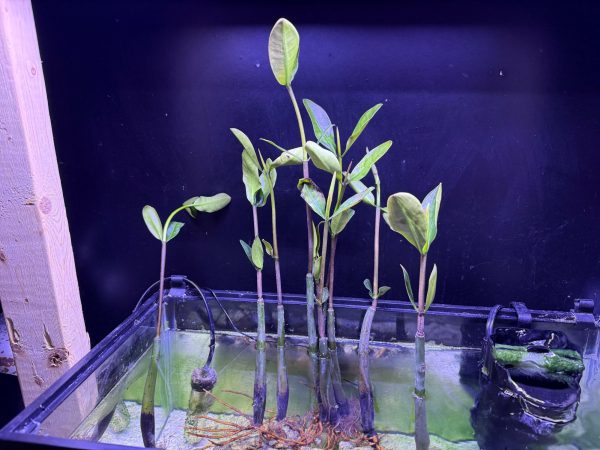
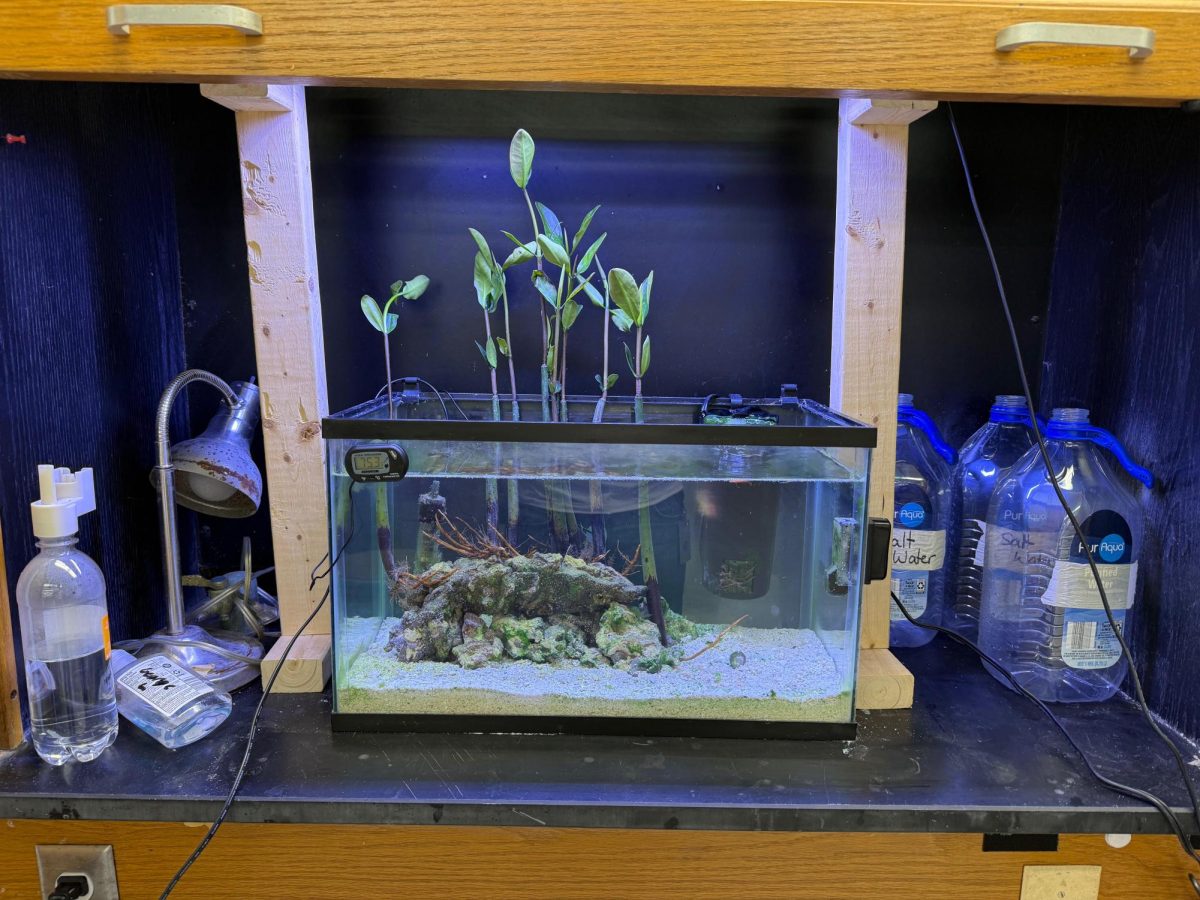
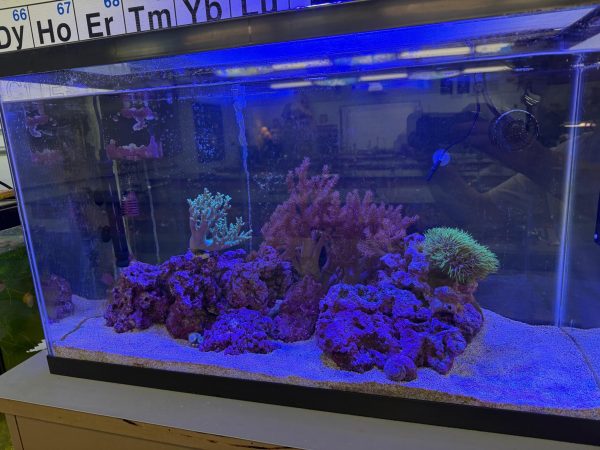
I had previously set up a 29-gallon reef aquarium in Room 421, a biology class. When I brought up the idea of setting up a new reef aquarium in that classroom, Ms. Matys strongly encouraged the idea. She was enthusiastic and also intrigued. She believed that it would be a great way for students to gain interest in marine biology and all the various habitats that exist around the world. After many months of planning, consulting, and purchasing the materials necessary for this project, I was finally able to set it up. It is still in process, as it is in the nitrogen cycle. Although the aquarium is not fully established, we were able to put in the mangroves and set the aquascape. I also built a wooden stand to hold the light above the aquarium, directly illuminating the mangroves and aquarium. Ms. Matys, after seeing the aquarium, was very excited and couldn’t wait until it was fully cycled. Then it would be ready to add crabs and all sorts of other crustaceans. Personally, I can’t wait to see it fully established and settled into a stable, self-contained environment.